 Fumely
How to Track Vaping Without Obsessing
Tracking works best when it is fast, neutral, and focused on patterns instead of punishment.
In this guide
The tracker should not become the habit
A tracking system can backfire if it asks for too much attention. If every log feels like a report card, you will either avoid it or obsess over it.
The better goal is a low-friction record. You want enough data to understand the pattern, not so much friction that the tracker becomes another source of stress.
Start with timing
Time is the simplest useful signal. When did you vape? How long was the gap since the last one? Did the next vape come sooner or later than normal?
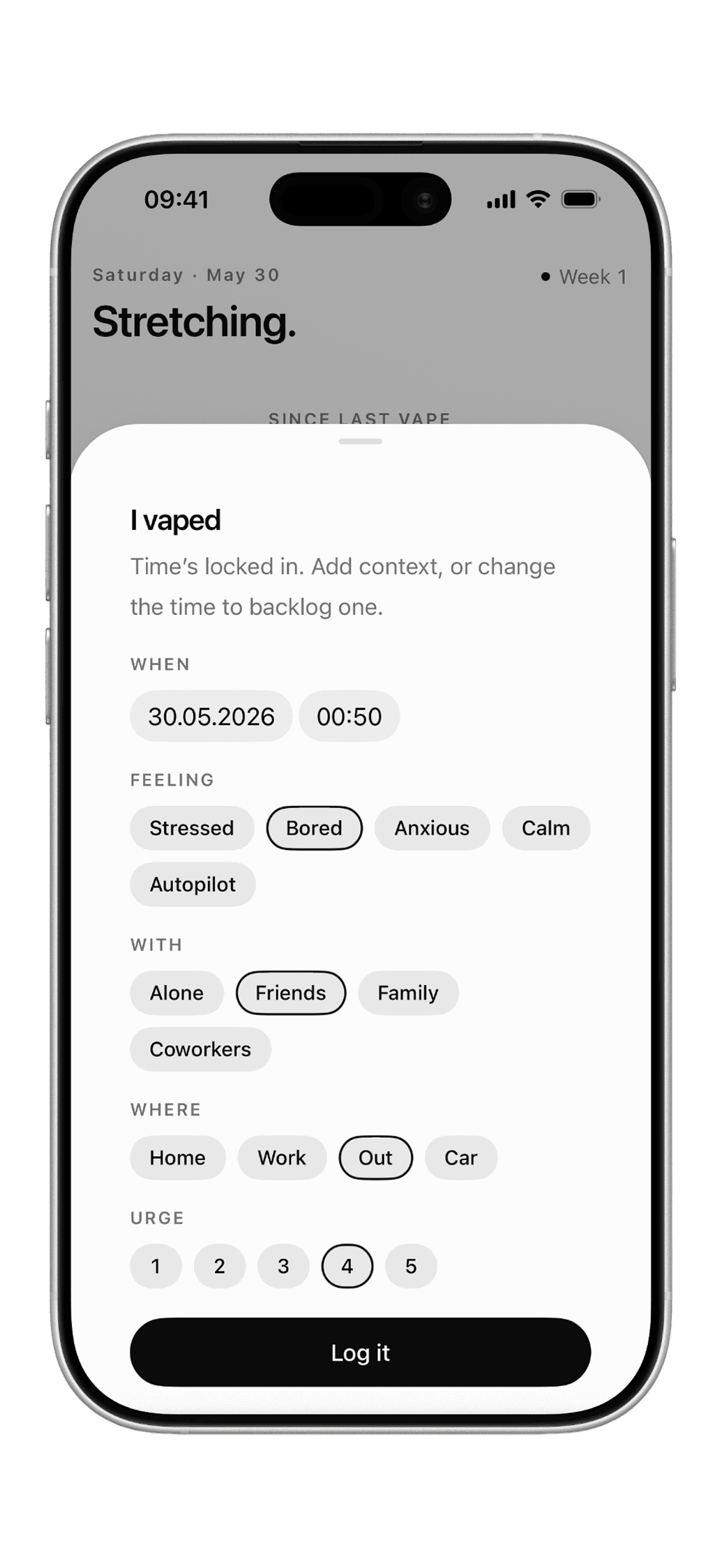
Once timing is captured, context can sharpen the picture. But context should remain optional so the basic log never becomes hard to complete.
- Required: log the vape.
- Useful: add urge strength when it stands out.
- Optional: mood, place, company, or trigger.
Review once, not constantly
Checking your stats after every vape can keep your attention stuck on vaping. A better rhythm is to review after a day or a few days.
That gives the pattern enough time to emerge and keeps the tracker in its proper role: a tool for awareness, not a running verdict.
Use the count carefully
Counts can be useful, but they can also make progress feel binary. If the number is higher today, it can feel like failure even when your longest gap improved.
That is why Fumely treats the gap as the more important number. The gap shows distance from the habit, even while the habit is still changing.